Friday, May 31, 2013

Special Guest Diana Cranstoun, Two Weeks of WWII Food Rations


I've written before on the vibrant writing community that is in Calgary, Alberta, Canada. I met today's special blog guest Diana Cranstoun when I joined Alberta Romance Writers' Association (ARWA) four years ago. She is a joy and an inspiration. I am honored to call her friend and to have her as a guest on my blog today! 

For those interested in World War II, you are in good company, as that is of particular interest to Diana, the main topic she writes about, and what prompted her to earlier this month eat only WWII food rations. For more information on Diana, visit her at dianacranstoun.com.

Please welcome Diana Cranstoun:

Firstly, many thanks for inviting me to guest blog on your site, Sarah.  I’m very excited about it!  As to what to write about...

Although I grew up in Glasgow 20 years after the Second World War ended, it’s not really surprising that particular war has always fascinated me.  On my daily walk to school I passed several gardens that still had air-raid shelters in them. When my history teacher asked my class how many of our fathers had been at Dunkirk, at least a dozen hands (including my own) shot into the air. And although the rebuilt stonework was fairly well matched, it was obvious where a landmine had taken out a tenement building on the street where my mother was born. 

The soldier/sailor/airman’s experience of those years is well documented, but those of the women they left behind, not so much. Perhaps that’s what was in the back of my mind when I decided to limit myself to wartime rations for a two week period.  What must it have been like trying to feed your family during that time?  (BTW, rationing in Britain continued until 1954, nine years after the war ended.)

Weekly allowance of rationed food for a British adult during WWII.
Photo by Diana Cranstoun

The weekly allowance of rationed food for a British adult consisted of: 8oz meat, 4oz ham or bacon, 2oz butter, 2oz cheese, 4oz margarine, 4oz cooking fat, 3 pints milk, 8oz sugar, 1lb jam every 2 months, 2oz tea, 1 egg, 3oz sweets.  Bread and vegetables (locally produced/in season) were not rationed and formed the basis of the diet.  Certain tinned foods were available on a points system. Although proteins e.g. eggs were rationed, that didn’t mean they were always available.

The first week was a challenge trying to juggle everything so I didn’t run out of rations, but by the second week I was starting to get the hang of it, and I learned a lot from the experience.  Preparation and cooking from scratch every day was very time consuming.  I had the luxury of a fridge, microwave and being able to buy all my groceries in one trip to the shops, but that wasn’t the case for the women during the war. Even harder if you were holding down a full-time job as well.

But perhaps the greatest thing I got out of the experience were the memories my aunt supplied.  She was a child during the war and had some unexpected tales to tell. 

One story I remembered my mother telling me, and which has always stuck in my head, was her experience during the Clydebank Blitz.  She was a young mother of a six month-old baby at the time. The night of the blitz, my grandmother gathered the whole family onto mattresses in the hall as the bombs fell. If they were going to die, they would die together.  (This was about half a mile away from the landmine mentioned above.)

My aunt, eleven years of age at the time, remembers the event differently.   We all gathered in the ‘safest’ place in the house but I several times made an excuse to go to the bathroom so I could see the searchlights and the glow of the fires. Ah the resilience of youth!

Oh yes, and then there was her story of the pheasant . . . !

Friday, May 10, 2013

Donald Maass, Writing 21st Century Fiction Workshop, Calgary, Alberta, Canada

Last Saturday I attended the Calgary association of Romance Writers of America's Spring 2013 workshop featuring Donald Maass, Writing 21st Century Fiction. What an incredible, intensive day, with absolutely lovely people. The workshop included hands-on writing that really cracked open another several layers of the writer inside. I'm still processing and analyzing all the information (get your geek on!). It was an excellent workshop.

CaRWA hosted the workshop in Redwood Meadows, a small, scenic community south of Calgary, Alberta, Canada, and writers from different local writing communities, including ARWA, IFWA, and WWC, attended. It is always inspiring being in a room full of writers and Alberta has a vibrant writing community!

Breaks were enjoyed outside in the best weather we've seen this spring so far. You know when the sun warms up the spruce needles and everything even smells great? That's what Saturday was like, gorgeous!

Donald Maass and Sarah Kades, CaRWA Spring 2013 Workshop.
I first heard of Mr. Maass four years ago.  My first novella was out with Amira Press and I knew I loved this whole writing thing, but that I had a lot to learn!  I joined a local writing group, ARWA, and a name kept popping up, Donald Maass. Everyone spoke so highly of this dude and I was encouraged to check out his books and see him speak if I ever got the chance. So I did.

It truly was a great day, with great people. I learned A LOT, busted past some writing comfort walls I didn't know were there, and reinforced some essential, core beliefs about writing and myself.

Storytelling is part of us. It always has been. It is cool to be part of that.


Thank you CaRWA for the opportunity and Mr. Donald Maass for coming. ;)

Happy Writing, Happy Reading!

Wednesday, May 1, 2013

Workshop: Writing Sexual Tension, Heightening Your Readers' Satisfaction


*Special 
Pre-Festival Workshop

Writing Sexual Tension, Heightening Your Readers' Satisfaction

In this three-hour workshop, ARWA's Sarah Kades and Lorraine Paton introduce techniques for creating believable sexual tension between characters by exploring the use of sensuality, emotions, and more. Come, learn how to satisfy your readers, and be emboldened.
Workshop will take place on Friday, August 9th at the Carriage House Inn from 9 AM - 12 PM, just prior to the festival.
You can register for this workshop at http://www.whenwordscollide.org/spec_workshop.php, or you can make out a cheque for $10 to "Alberta Romance Writers' Association" and mail it prior to July 31, 2013 to:
Alberta Romance Writers' Association
c/o When Words Collide
c/o The Sentry Box
1835-10th Ave SW,
Calgary, Alberta
T3C 0K2 Canada
ARWA
Note: This workshop is presented by ARWA for the low, low registration fee of $10 and is made possible through an agreement with When Words Collide.

Tuesday, April 30, 2013

Big Brothers, Big Sisters

Hi Everyone!
Sarah Kades with her super cool brother.

I have an awesome brother. He was super cool to grow up with; we hung out together, had overlapping social groups, laughed like siblings can, he taught me about cars in particular, and explained anything mechanical in general, he was there for long distance phone calls or emails when I was off exploring other countries but homesick something fierce. . . you get my drift. Well, my awesome big brother is also a Big Brother and they are fundraising for Big Brothers Big Sisters in Dane County, Wisconsin! To check out what they are about or to donate, check out the link below! 

Happy Fundraising! 

Also, a big THANK YOU to all who help in their own way to make this world beautiful.  Thank you for sharing your joy and light. ;)

http://bbbsdanecounty.kintera.org/faf/donorReg/donorPledge.asp?ievent=1046798&supid=381902775

Sunday, April 21, 2013

Energy Hangover

So I know I usually blog about writing or outdoor stuff, but besides the environmental consultant day job and author gig, I'm also a certified Angel Therapy Practitioner ®. Let's talk energy.

So in a dream a couple nights ago an old acquaintance showed up and asked if a person could have a hangover from an upsetting event, like an emotional hangover. It was interesting he was the one who asked because he showed up in the dream in a gigantic black truck and is more prone to watching professional fights on TV, than asking energy questions to a woman who facilitates angel healing. But the dude had an important question, lets answer it.

The answer is yes, you absolutely can have an emotional hangover. I want to take it one step further and talk about an energy hangover.

Basically a hangover is your body re-harmonizing. We usually can physically feel some (lots) of the re-harmonizing. Alcohol, greasy food, sugary food can all give hangovers. Strong emotions can give hangovers, especially when they prompt the body to release goodies like adrenaline or endorphins. Energy can, too. Energy work often unlocks toxic energy that a person has been holding onto, sometime for a very long time (years, decades, or even hereditary energetic toxins you've decided to turf out). It is good thing to release crappy energy that you don't need anymore, but your body can sometimes feel it.

Hangovers, energy or otherwise, is your body rebalancing. Let it. Water, rest and time are good things to remember. Oh yes, and to be gentle with yourself. Sometimes we are crazy hard on ourselves . . . why do we do that?

It was a rather strong prompt to write this post. Hope it helped some of you.
Take care, happy reading, happy writing!


Sunday, April 14, 2013

Why I Write Romance Novels Set in the Great Outdoors

I write romance novels and novellas set in the natural world, the great outdoors. Why? Because every time I sit down to write, I get to connect with places like this picture and it makes me really happy. 

It also gives me the opportunity to share my love of this beautiful world with my readers.

Have fun out there! Happy Reading, Happy Hiking!

Sarah Kades with Family and Friends in Kananaskis Country, Alberta, Canadian Rockies

Wednesday, March 20, 2013

Sharon Wildwind, my Spring Equinox Guest

Happy Ostara, Happy Spring Equinox!

Today is one of my favorite days, the spring equinox. It is a day of balance and fertility (e.g. creativity). I will be celebrating the balance and creativity in my life and writing today.

For now, it is my pleasure to welcome Sharon Wildwind as a guest on my blog on this special day:


What Comes Next is Not the Way to Plot

Today the world balances on its polar axis, and soon the northern hemisphere will make a joyful tilt toward spring and summer. What comes next is longer days, warmer weather, and a plethora of enjoyable outdoor activities.

What next is a good question for equinox, but when I ask a writer about her work in progress, all too often her answer is a litany of events that don't reflect the book's heart.

Tell me about your book.

It’s a mystery-romance about a woman who got in trouble at work and left home in disgrace. Her friend runs a fishing lodge where she used to live. He calls in a panic, insisting she come back, but won’t say why. When she returns, she discovers her brother and his new bride honeymooning at the lodge. She doesn’t like her brother’s wife. Her friend has family problems, too. His grandfather, from whom he’s been estranged for years, decides to hold a family reunion at the lodge. When his grandfather is murdered, the two of them have to find the killer.

This is a what-comes-next summary. This happens, then this happens, then this problem happens, and then they solve that problem, but this other problem comes up. It might be interesting (or not), but is it compelling? It took me a long time to realize there was a better way to summarize a story.

Tell me about your book.

It’s a mystery-romance. A woman was forced to leave a small town in disgrace after making an unethical business decision. Her brother’s unexpected marriage compels her to return. She immediately discovers why her brother didn’t invite her to his wedding, and she fears that his new wife is a gold-digger. The man she once loved was responsible for her being fired. She’s not sure what their relationships is now, especially when his estranged grandfather’s murder forces them to work together. Finding the killer is certain to put her in more ethical hot water.

Focusing on what’s at stake in place of what comes next works for plotting, too. For the writer who prefers to plunge in without a lot of planning, two questions will suffice:
When the story begins, what is the character’s physical, mental, emotional, and spiritual situation?
What is his/her first challenge and how does he/she meet that challenge?

Karen Hogarth is tired. She’s grateful to have a job, and a furnished room in a boarding house. Working casual means her schedule, and her sleep, changes daily. She hasn’t time, energy, or inclination to make friends. Thank goodness for library cards. She taught herself to knit from a book, is already bored with scarfs, but can’t focus enough to try anything more complicated. She’s not sorry for what she did, but regrets getting caught. Someone needed help and she helped. That’s the way life should be.

Being told her brother is married is her first challenge. Why in the world would he get married without telling her? For his sake, she has to go back, right away. Returning to the small town she left will be inconvenient, expensive, and scary, but this is her brother we’re talking about. She didn’t spend eight years raising him to have him throw his life away on the wrong women.

That should be enough to kick-start the writing.

For writers who like to plan in more detail, repeat those two questions for each major character. Attempt to have characters start from opposing positions. For example, Karen doesn’t like her new sister-in-law; her former lover thinks the woman will be a good influence on her brother. Bingo: instant tension.

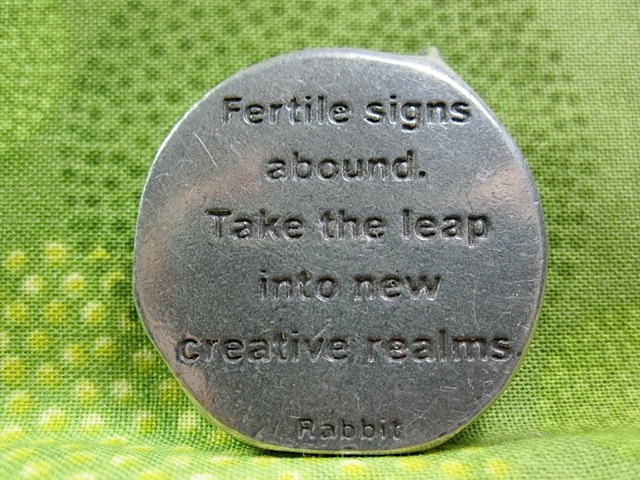
Here’s my token to celebrate spring. Hope you have a wonderful equinox.


Sharon Wildwind is a Calgary, Alberta mystery writer. Her most recent book, Loved Honor More, was published in 2012 November, and that completed her first series. She’s currently at work on a stand-alone mystery set in the folk music world. Her web site is www.wildwindauthor.com and she tweets @sharww.